Herbert White
The Monkey's PawHerbert White is the only son of Mr. White and Mrs. White, and his fatal accident converts a joking suggestion at the family chess table into the story’s central catastrophe. He is remembered through flashes of wit and affectionate familiarity, but after the accident he becomes an absence around which money, grief, and the parents’ divided hopes gather. The exact sum he proposes as a convenience is later paid as compensation for his death, an answer that fulfills the wish in form while exposing its terrible cost.
Identity and Introduction
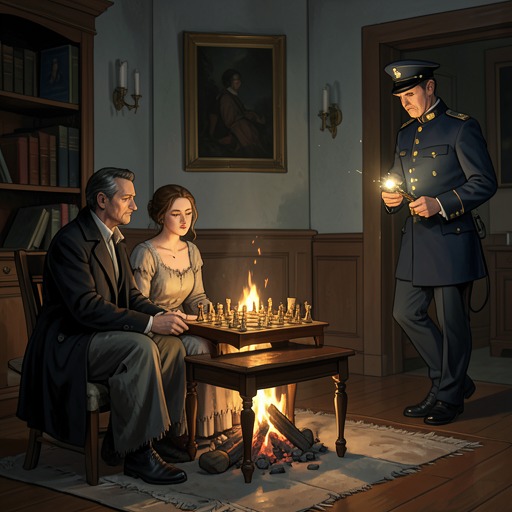
Herbert first appears in the small parlour of Laburnam Villa, playing chess with his father while Mrs. White knits by the fire. The domestic scene gives him an easy familiarity with both parents: when Mr. White remarks on the wind and says he doubts a visitor will come that night, Herbert keeps his attention on the board and answers with a chess player’s decisive “Mate.” The brief exchange establishes him as alert and confident, able to turn his father’s distracted comment into a playful victory.
That quickness becomes teasing wit when the family discusses the monkey’s paw. After Sergeant-Major Morris explains that the talisman grants three wishes to each of three men, Herbert asks why Morris does not use three wishes himself. His question is clever, but it also presses against the seriousness of the soldier’s account: Morris has already made his wishes, and the first man’s third wish was for death. Herbert’s youthful levity is therefore set beside a warning whose consequences he does not yet treat as immediate.
The Wish and Its Irony
When his father says he does not know what to wish for and seems to have all he wants, Herbert suggests a specific solution to the household’s financial burden: two hundred pounds would clear the house. The proposal is delivered as a practical joke rather than as a grave demand. Herbert rests a hand on his father’s shoulder; then, as Mr. White makes the wish, he sits at the piano and strikes a few impressive chords, adding a theatrical flourish to the moment.
The sum comes back after Herbert’s death with devastating precision. A visitor speaking for Maw and Meggins explains that the company disclaims responsibility and admits no liability, but offers the family compensation in consideration of Herbert’s services. The amount is two hundred pounds—the same figure Herbert named and Mr. White wished for. The repetition makes the money both the apparent fulfillment of the request and the token of what it cannot replace: the family receives the amount associated with relief from its financial burden only because its son has died.
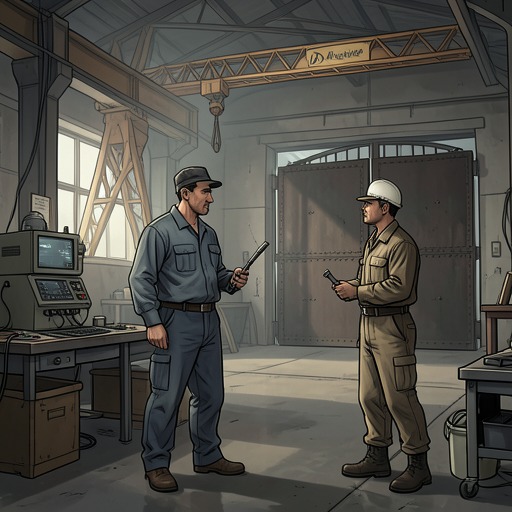
The story does not turn that coincidence into a simple account of the company’s legal obligations. The visitor stresses that he is merely carrying out orders and that the firm denies responsibility; the scene presents the company’s position and the payment, not a broader ruling about workplace compensation. Against that restrained, formal language, Mr. White’s response is immediate and bodily: as his wife cries out, he smiles faintly, reaches forward like a sightless man, and collapses. The sum is exact; the loss it names is not measurable in money.
Death and the Family’s Grief
Herbert’s accident is reported rather than staged. The visitor says that Herbert was caught in the machinery, and the parents must receive the fact through his low-voiced explanation and his averted face. Mrs. White first gives thanks at the visitor’s reassurance, then understands its sinister meaning. Mr. White repeats the words about the machinery in a daze, takes his wife’s hand, and presses it as he used to during their courtship nearly forty years earlier. He tells the visitor that Herbert was the only one left to them and that the loss is hard.
That statement defines the scale of Herbert’s place in the family without giving him a life beyond the scenes the story supplies. His death leaves his parents with no one else to speak of, and the narrative follows them into a house steeped in shadow and silence. They bury him in a new cemetery two miles away; at first they remain expectant, as though something else might lighten the burden, but as the days pass that expectation gives way to resignation. Their altered household makes the absent son more present in grief than he had been in the story’s brief, lively opening.
The Attempt to Bring Him Back
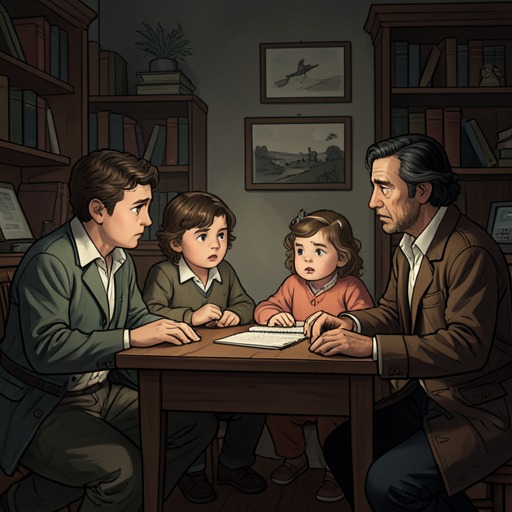
About a week after the burial, Mrs. White seizes on the remaining wishes and demands that her husband use the paw to wish their boy alive again. Her insistence grows out of bereavement, but it meets Mr. White’s knowledge of what the accident did to Herbert. He tells her that Herbert has been dead for ten days and that he could recognize him only by his clothing. The detail sharply distinguishes the wished-for son from the body his father remembers: the mother imagines the child she nursed, while the father fears the ruined physical return that her wish could summon.
Mr. White goes downstairs to retrieve the talisman, afraid that an unspoken wish might bring Herbert before he can get away. In the darkness he loses his direction, finds the paw at the mantelpiece, and gropes back through the parlour and passage with it in his hand. Mrs. White waits in bed, pale and expectant, and urges him to wish. The sequence makes Herbert’s possible return inseparable from the father’s fear: the object that once seemed to offer money now threatens to give grief a visible and terrifying form.
A knock sounds through the house. Mrs. White cries that it is Herbert and runs toward the door, but Mr. White reaches her first and holds her tightly by the arm, whispering what she intends to do. The story thus brings Herbert back as an uncertain presence at the threshold, not as a restored character whose condition can be verified. The parents’ opposing responses—her rush to open the door, his effort to restrain her—leave the hoped-for reunion suspended between longing and dread.
Narrative Role and Significance
Herbert’s importance rests partly on how little the story shows of him after the family’s first scenes. His wit and ease establish an ordinary son within an affectionate household; the machinery accident then removes him from the action, so that his parents and the reader encounter him through report, memory, compensation, and expectation. The shift from his spoken suggestion of two hundred pounds to the company’s identical payment makes the wish’s fulfillment cruelly literal without making the payment a substitute for the person who is gone.
His mother’s plea to restore him and his father’s fear of recognizing him only by his clothes give the same absence two incompatible meanings. For Mrs. White, “our boy” remains the child she nursed, and the knock seems to promise his return. For Mr. White, the remembered body has been so damaged that reunion may mean another horror. Herbert is therefore central not because the narrative follows a long personal transformation, but because his death exposes the limits of what the paw can grant: a sum of money can match a wish, and a door can be approached, but neither can make loss safe or undo its consequences.